
In high-traffic buildings, the biggest security challenge is not just stopping unauthorised access—it is controlling how fast people move through secure entry points without creating bottlenecks. Many facilities in Oman face this daily during shift changes, office opening hours, or visitor surges.
For such situations, flap barrier turnstile become more than just entry gates. They act as intelligent traffic control systems that balance security enforcement with uninterrupted pedestrian flow. Instead of slowing people down, they structure movement in a controlled, predictable way while still integrating with modern authentication technologies.
For corporate offices, government institutions, and public-facing facilities, flap barriers are now a core part of modern physical access control systems.
Why Traditional Entry Points Struggle in High-Traffic Environments
Before automation, entry points relied heavily on guards, manual checks, or simple card readers placed at doors. These setups often create hidden inefficiencies:
- Queues during peak hours
- Manual verification delays
- Inconsistent identity checks
- Tailgating and “group entry” risks
- High dependency on security staff
- No real-time traffic visibility
Even when basic access control systems are installed, they often fail to manage flow. Security may be strong, but movement becomes slow and disorganised.
Flap barrier turnstiles solve this specific gap: controlled movement at scale.
What Makes Flap Barrier Turnstiles Different
A flap barrier turnstile is a motorised entry system that opens a set of retractable flaps only when access is authorised. Unlike simple gates, it enforces one-person-per-authorisation movement.
Each entry is validated through systems such as:
- Smart card access
- Swipe card access
- Fingerprint access control
- Face recognition access
- Mobile based door access systems
- Integrated biometric access control systems
Once authentication is verified, the barrier opens for a brief moment, allowing only the authorised individual to pass.
The key difference is not just security—it is flow discipline.
Turnstile Types Based on Real Facility Needs
Different environments in Oman require different throughput levels, and flap barrier systems are designed accordingly.
Standard Office Flap Barriers
Used in corporate environments where employee traffic is steady but controlled. These systems prioritise reliability and smooth daily operation over ultra-high speed.
High-Throughput Flap Barriers
Designed for peak congestion scenarios such as government buildings, large headquarters, and public service centres. These systems reduce waiting time by accelerating opening cycles and multi-lane configuration.
Dual-Lane Entry Systems
Used where separation of entry and exit flow is required. This avoids crossing movement and improves crowd discipline during rush hours.
Accessibility Lanes
Wider lanes designed for wheelchair users, deliveries, or visitors requiring additional clearance. These are often paired with standard lanes for inclusive entry design.
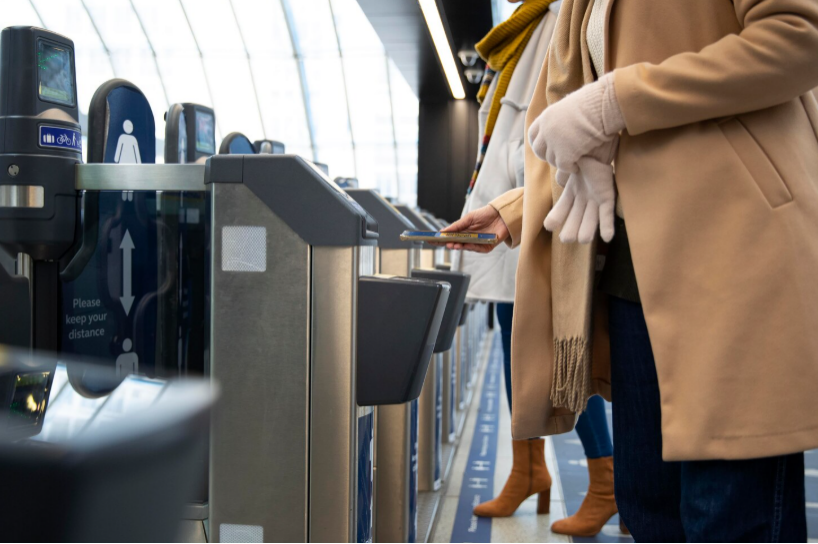
Sensor Technology: The Real Intelligence Layer
What makes modern flap barrier systems “intelligent” is not just the gate itself—it is the sensor network controlling it.
1. Infrared Detection
Ensures the system detects a person’s presence before and during passage. It prevents accidental closing and improves safety.
2. Anti-Tailgating Sensors
This is one of the most critical features. It detects when more than one person tries to pass on a single valid authentication. Without this, security gaps remain even in advanced systems.
3. Motion Tracking Sensors
These monitor movement direction and flow patterns, ensuring users enter from the correct side and reducing misuse.
4. Safety Obstruction Sensors
If a person stops midway or an object blocks the path, the system immediately halts flap movement to avoid injury.
Together, these sensors ensure the system is not just a gate—but a controlled intelligence layer managing movement.
Throughput Efficiency: Where Flap Barriers Add Real Value
The biggest operational advantage of flap barrier turnstiles is throughput control.
In high-traffic facilities, the problem is rarely security—it is congestion.
Flap barriers improve flow by:
- Allowing rapid authentication cycles
- Reducing manual intervention
- Preventing clustering at entry points
- Maintaining steady movement rhythm
- Supporting multiple lanes simultaneously
When combined with biometric access control or smart card access systems, thousands of entries can be processed efficiently without security compromise.
The result is predictable, organised movement—even during peak load.
Integration with Modern Access Control Ecosystems
Flap barrier systems are most effective when part of a wider security infrastructure rather than standalone devices.
They typically integrate with:
- Biometric time attendance systems
- Door access control system
- Visitor management platforms
- CCTV monitoring systems
- Mobile access control applications
- Security dashboards and analytics tools
This integration allows organisations to link who entered, when they entered, and where they went into one system.
For example: A face recognition scan at entry can automatically log attendance while simultaneously triggering CCTV event tagging.
Real-World Use Cases in Oman
Flap barrier systems are particularly relevant in environments where both security and movement speed matter.
Government Facilities
Used to regulate public and staff movement while maintaining strict identity verification.
Corporate Headquarters
Helps manage employee inflow during morning peaks and exit surges after work hours.
Financial Institutions
Supports restricted entry zones and prevents unauthorised access to sensitive departments.
Educational Campuses
Used for student tracking, attendance monitoring, and controlled access to academic buildings.
Transport and Public Buildings
Manages unpredictable crowd flow without compromising security screening.
The Hidden Benefit: Behaviour Control
One overlooked advantage of flap barrier systems is how they influence behaviour.
When people pass through structured lanes with enforced single-entry validation, they naturally follow orderly movement patterns. Over time, this reduces:
- Queue cutting
- Tailgating attempts
- Entry confusion
- Security confrontations
In other words, the system doesn’t just control access—it shapes how people move.
Operational Impact Beyond Security
While flap barrier systems are installed for security, their impact extends into operations:
- Reduced workload on security personnel
- Faster employee onboarding during peak hours
- Improved attendance accuracy when integrated with biometrics
- Better visitor flow management
- Real-time occupancy insights
This turns them into both a security tool and an operational control system.
Secure Intelligent Entry Flow with AL Maha Business Systems
Flap barrier turnstiles are intelligent entry management systems designed for environments where speed and security must coexist.
By combining sensor intelligence, access control integration, and structured movement design, they solve one of the most common operational challenges in high-traffic facilities: uncontrolled crowd flow.
For organisations in Oman, they represent a practical step toward smarter, more efficient, and more secure workplaces.
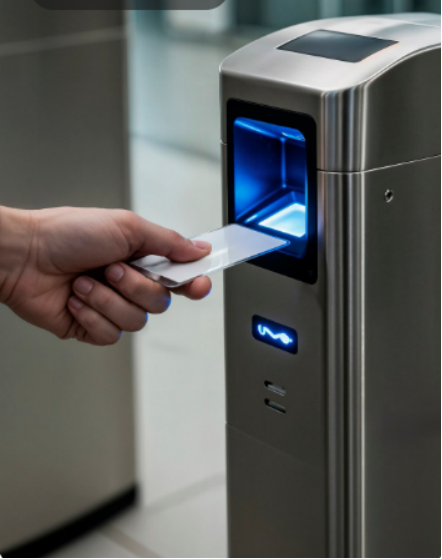
AL Maha Business Systems provides advanced turnstile gate with card reader solutions designed for high-traffic corporate and government environments across Oman. Our systems integrate seamlessly with biometric access control, smart card access, fingerprint authentication, face recognition, and mobile based door access systems to deliver secure and efficient people flow management.
Call now for a tailored entry solution that improves throughput, strengthens security, and brings intelligence to your facility access control systems.